
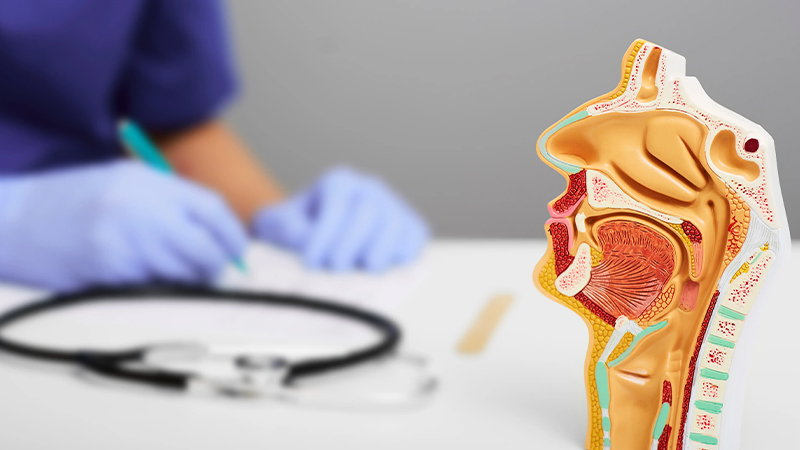
Endoscopic sinus surgery is a method of treating chronic sinusitis, nasal polyps and similar sinus conditions that do not respond to medication, using a thin camera passed through the nostrils, without any incision on the face or inside the mouth. The aim is to open blocked sinus drainage pathways so that the sinuses can ventilate again and drain their mucus naturally. Today it is the standard approach to the surgical treatment of sinus disease.
What Is Endoscopic Sinus Surgery?
The sinuses are air-filled spaces inside the facial bones, connected to the nasal cavity by small channels. The maxillary sinuses lie in the cheeks, the ethmoid sinuses between the eyes, the frontal sinuses in the forehead and the sphenoid sinuses deep at the skull base. The lining (mucosa) of the sinuses constantly produces mucus, which is carried toward the nose through the sinus openings by the movement of tiny hair-like cells.
The sinus openings are very narrow, and the drainage of several sinuses, particularly around the ethmoid area, converges in a small region called the “ostiomeatal complex.” Swelling, polyps or a structural narrowing in this region can block more than one sinus at a time and trap mucus inside. As a result, the inflammation becomes chronic.
In endoscopic sinus surgery, an endoscope, a thin camera with a light placed inside the nose, displays these narrow areas magnified on a screen. The surgeon clears diseased tissue and blockages with fine instruments while preserving healthy lining. That is why the method is also called “functional” endoscopic sinus surgery: the goal is to restore normal sinus function.
How It Differs From Open Sinus Surgery
In the past, sinus operations were mostly performed through incisions under the upper lip or on the face, scraping away much of the sinus lining, with more swelling and a longer recovery. The endoscopic technique widens the natural drainage pathway and leaves healthy lining in place, preserving the sinus’s ability to clean itself and shortening recovery. Open methods are now considered only in selected tumor and complication cases.
Endoscopic methods are also used for tear duct surgery (dacryocystorhinostomy), cerebrospinal fluid leak repair and certain skull base tumors.
Who Is a Candidate?
Most patients with sinus complaints improve with medication. Surgery is considered for patients whose complaints continue despite appropriate medication used for long enough, or who develop complications. The main indications are:
- Chronic rhinosinusitis: Sinusitis lasting longer than 12 weeks that does not improve with nasal sprays, nasal rinsing and, when needed, antibiotics
- Nasal polyps: Polyps that do not shrink enough with medication and cause blockage and loss of smell
- Recurrent acute sinusitis: Frequent sinusitis episodes each year that clear completely in between
- Fungal sinusitis: Especially a fungus ball inside a sinus or allergic fungal sinusitis
- Mucocele: A sac formed by mucus trapped inside a sinus
- Complications of sinusitis: Situations in which the infection risks spreading to the area around the eye or inside the skull
- Suspected tumor: Taking a biopsy from a growth inside a sinus or removing a benign tumor
The decision to operate is not based solely on sinus opacity seen on a CT scan. The patient’s complaints, endoscopic findings and imaging results must be evaluated together. If there is facial pain without detectable sinus disease, other causes should be investigated.
Preparation and Examination Before Surgery
Evaluation begins with a detailed history and an ENT (ear, nose and throat) examination. Nasal endoscopy is used to examine the inside of the nose, the sinus openings, any polyps and the structure of the septum. A CT scan of the sinuses is always obtained for surgical planning. It shows which sinuses are diseased and their relationship to the eyes, skull base and major blood vessels. An MRI may also be requested if a tumor or complication is suspected.
If a deviated septum or enlarged turbinates make it harder to reach the sinus openings or contribute to the blockage, correcting them in the same session can be planned. Patients with asthma and aspirin sensitivity should be prepared for surgery together with their other physicians.
Points to keep in mind during preparation:
- Blood thinners, aspirin, certain pain relievers and herbal supplements should be reported; if necessary, they are paused for a set time before surgery after consulting the prescribing doctor.
- For patients with polyps, a short course of steroids in the days before surgery may be recommended to reduce bleeding and shrink the tissue.
- Blood tests and an anesthesiologist’s assessment are completed for general anesthesia.
- Eating and drinking stop from the specified time the night before surgery.
- For smokers, quitting before and after surgery clearly supports healing.
Realistic Expectations
Surgery brings clear relief in most patients from complaints such as nasal blockage, postnasal drip, facial pressure and frequent sinusitis episodes. However, it does not eliminate underlying tendencies such as allergy, asthma or a tendency to form polyps. It is one part of a long-term plan, and the follow-up schedule should be discussed from the start.
How Is the Surgery Performed?
The operation is performed under general anesthesia and usually takes 1–2 hours, depending on the extent of the disease. Because no external incision is made, no scar is left on the face. Vessel-constricting medication is applied inside the nose to reduce bleeding.
Steps of the Operation
- The endoscope is placed through the nostril and the nose is evaluated on the screen.
- The thin bony structures covering the front of the ethmoid sinuses are removed to open the ostiomeatal complex.
- Depending on the extent of the disease, the maxillary sinus opening is widened and the ethmoid, frontal and sphenoid sinuses are entered as needed.
- Polyps, inflamed tissue, thick mucus or fungal material are cleared; if necessary, samples are sent for pathology.
- The inside of the sinuses is rinsed with saline and bleeding is controlled.
The scope of the procedure differs for each patient. Opening a single sinus may be enough, while patients with extensive polyps may need all the sinuses opened. Near the skull base and eye, some centers use a navigation system that shows the instrument’s real-time position on the patient’s CT images.
Balloon Sinuplasty
In some carefully selected patients with limited disease, balloon sinuplasty may be used: a small balloon is placed in the sinus opening and inflated to widen it. This method widens the opening without removing tissue, but in polyps and extensive disease, conventional endoscopic surgery is preferred.
At the end of the operation, soft materials that dissolve on their own or are easy to remove are often placed in the nose; many patients do not need traditional tight packing.
Recovery After Surgery
Patients are usually discharged the same day after recovering from anesthesia. Pain is usually mild to moderate and controlled with simple pain relievers. Most patients can return to daily life and desk work within 1–2 days; for physically demanding work and sports, a longer wait is advised.
The First Few Days
In the first days, nasal blockage, fullness, slightly blood-tinged discharge and postnasal drip are expected. These complaints come from swelling, blood clots and crusts at the surgical site and ease as healing progresses.
- Do not blow your nose forcefully during the first week.
- If you need to sneeze, sneeze with your mouth open.
- Keep your head slightly raised while sleeping.
- Rinse your nose regularly with the recommended saline; this softens crusts and keeps the sinuses clean.
- Postpone heavy lifting, working bent over and strenuous exercise for as long as your doctor advises.
- Avoid saunas, steam baths and very hot showers for a while.
Rinse gently with the solution and device your doctor recommends, and clean the bottle regularly. Thick mucus or clots coming out with crusts is a normal part of healing.
Diet
Start with fluids, then move to normal foods; lukewarm meals are preferable to very hot or spicy ones in the first days. Plenty of water keeps mucus thin.
Follow-Up Visits
Postoperative care is at least as important to the result as the surgery itself. At check-ups in the first weeks, the nose and sinus openings are examined with the endoscope; crusts, clots and mucus are cleared and scar bands are prevented. Full healing of the lining can take several months.
Because chronic rhinosinusitis and polyp disease develop on a background of inflammatory tendency, nasal sprays and rinsing may need to be continued for a long time after surgery. The opened sinuses also make it easier for medications to reach the diseased area.
Notes for Patients Traveling from Abroad
Patients coming from abroad should generally plan to stay in Istanbul for about 7–10 days, so that the first endoscopic cleaning and the removal of any non-dissolving packing can be done in person. In the early period, swelling and crusts can make it harder for the sinuses to adjust to cabin pressure changes and may increase the risk of bleeding, so flying is often postponed for one to two weeks; your surgeon will advise on timing based on how healing is progressing. Later endoscopic follow-up can usually be coordinated with an ENT specialist after returning home.
Possible Risks and Important Considerations
When performed with appropriate patient selection and careful planning, this surgery is generally a safe procedure. However, because the sinuses lie very close to the eyes and the skull base, possible risks should be discussed in detail with the patient:
- Nosebleeds during or after surgery
- Scar bands inside the nose and re-narrowing of the sinus opening
- Infection and prolonged crusting
- Recurrence of the disease over time, especially in patients with polyps
- Rarely, bruising or swelling around the eye
- Very rarely, cerebrospinal fluid leak or problems with vision or eye movement
Serious complications are quite uncommon. A detailed CT review, careful surgical planning and navigation support when needed help keep these risks to a minimum.
After surgery, contact your doctor without delay if you notice:
- Nosebleeding that does not stop or is increasing
- Swelling around the eye, blurred vision or double vision
- Clear, watery discharge from one side that increases when leaning forward
- Severe headache, neck stiffness or high fever
Endoscopic Sinus Surgery: Frequently Asked Questions
Will sinus surgery leave a scar on my face?
No. The entire operation is done through the nostrils, so there is no incision or scar on the face or inside the mouth. The shape of the outer nose does not change either.
Can sinusitis come back after surgery?
By opening the blocked sinus pathways, surgery clearly reduces complaints in most patients. However, because underlying causes such as allergy, asthma or a tendency toward polyps persist, inflammation or polyps may develop again over time in some patients. Regular check-ups and continuing the recommended medications reduce this risk.
Will my sense of smell improve after sinus surgery?
If smell loss is due to polyps and sinus inflammation, the sense of smell improves partly or fully in many patients after surgery. The degree of improvement varies from person to person, depending on how long the smell loss has lasted and how extensive the disease is.
Can I fly after the operation?
Early swelling and crusts can make it harder to adjust to pressure changes, so air travel is timed with your doctor at a follow-up visit, based on healing.
Is endoscopic sinus surgery performed on children?
Most sinus problems in children improve with medication and, when needed, adenoid surgery. Endoscopic sinus surgery is used in a limited way in selected situations such as cystic fibrosis, an antrochoanal polyp or complicated sinusitis, with attention to facial growth.
Conclusion
Op. Dr. Tayfun Demirel, ENT specialist, evaluates patients with chronic sinusitis, nasal polyps and other sinus conditions at the practice in Ataşehir, Istanbul, using endoscopic examination together with CT findings. Whether medication is sufficient, the scope of surgery if it is needed and the postoperative follow-up are all planned individually. Please contact the clinic to book an appointment. This article is for informational purposes only; an in-person examination is required for diagnosis and treatment.
