
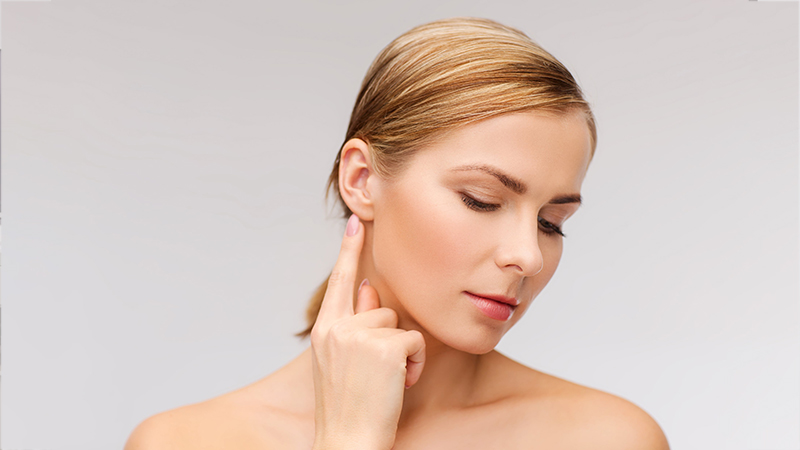
Prominent ear surgery is an aesthetic and reconstructive procedure that brings ears that stick out too far from the head, or that lack their natural folds, into a more balanced position and shape. Known medically as otoplasty, it is often associated with childhood, yet it can be performed just as well in teenagers and adults. The goal is ears that suit the face, look natural and resemble each other on both sides.
What Is Prominent Ear Surgery?
The outer ear (auricle) consists of a flexible cartilage framework covered with skin. The folds of this framework determine the shape of the ear and the angle it makes with the head. Normally the ear sits at roughly 20 to 30 degrees from the scalp; when this angle increases noticeably, the ears stand out enough to draw attention from the front or back.
Prominent ears are a variation in shape seen in about 5 percent of people and often run in families. They may affect one or both ears and do not affect hearing. Prominent ear surgery is therefore done not for hearing but to correct appearance and help the person feel more comfortable.
Structural Causes of Prominent Ears
- Underdeveloped antihelical fold: When the Y-shaped fold just inside the ear rim does not form properly, the upper part of the ear flares outward. This is the most common cause.
- Excess conchal cartilage: When the bowl-shaped area around the ear opening is deep or wide, the whole ear is pushed away from the side of the head.
- Forward-facing earlobe: In some people, the earlobe sticks out clearly even when the upper ear sits normally.
- A combination of factors: Many people have two or three of these features together, and the surgical plan combines techniques accordingly.
The Scope of Otoplasty
Otoplasty also covers other reshaping procedures for the outer ear, such as upper rims that fold inward, size differences between the ears, torn or stretched earlobes and deformities after trauma. This article focuses on prominent ears, the most common situation.
Who Is a Candidate for Prominent Ear Surgery?
Because the outer ear reaches most of its adult size around age 5 to 6, otoplasty can be performed from this age onward. There is no upper age limit. Anyone in good general health with realistic expectations can be evaluated.
Prominent Ear Surgery in Adults
Many adults seek this operation after missing the chance in childhood, after years of hiding their ears with a hairstyle, or because they feel self-conscious with short hair, glasses or a helmet. Adult cartilage is firmer, so besides stitches the surgeon may more often thin or score the cartilage to create the new fold. Results are satisfying for most adults too, although mild swelling may last a little longer.
Suitable Candidates for Otoplasty
- People bothered by the angle or shape of their ears who want the change for themselves
- Those with clear asymmetry between the two ears
- Patients who need a revision after earlier ear surgery
- People whose upper ear is folded over or whose earlobe points clearly forward
- Those without a bleeding disorder, uncontrolled chronic illness or active infection around the ear
Preparation and Examination Before Surgery
The first consultation starts with what bothers the person about their ears and what result they hope for. Each ear is then examined separately: the angle between ear and head, the presence of the antihelical fold, the depth of the concha, the position of the earlobe and the flexibility of the cartilage. The ear canal and eardrum are also checked to rule out any accompanying ear condition.
Photographs are taken from standard angles for before-and-after comparison, and the planned changes are explained. It is also discussed that flawless symmetry does not exist in nature; the aim is for both ears to look similar and natural. Patients traveling from abroad can share photos of their ears in advance and should bring a list of their medications and any relevant medical reports.
What to Keep in Mind Before Surgery
- Aspirin, blood thinners, fish oil and some herbal products can increase bleeding, so tell your doctor about them and pause them only on medical advice.
- If you smoke, stopping for a period before and after surgery supports wound healing.
- If you have long hair, arrive with it washed and tied back; shaving behind the ear is usually not necessary.
- Because of the bandage after surgery, choose comfortable clothing that buttons or zips at the front.
How Is Prominent Ear Surgery Performed?
Prominent ear surgery is performed under general anesthesia and usually takes 1 to 2 hours for both ears. The incision is placed on the back of the ear, close to the natural groove where the ear meets the scalp, so the scar is not visible from the front or side.
Main Techniques Used in Otoplasty
- Permanent shaping stitches: If the antihelical fold is missing, fine permanent stitches placed on the back of the cartilage create a new fold. Because the cartilage is shaped without cutting, the contour looks natural.
- Concha-mastoid stitches: In ears with a deep concha, the conchal cartilage is stitched to the tissue covering the bone behind the ear, bringing the ear closer to the head.
- Conchal reduction: If the concha is very large, a small strip of cartilage can be removed.
- Cartilage thinning or scoring: Especially in adults, the front or back of firm cartilage is scored in a controlled way so it bends more easily.
- Earlobe correction: A small piece of skin is removed from behind the earlobe so that it sits back.
Several of these techniques are combined in most patients. At the end, excess skin is removed, the incision is closed with dissolvable stitches, soft cotton padding is placed around the ears and a head bandage is applied to protect the new shape.
Personalizing the Surgical Plan
The two ears are rarely identical, so each is measured separately and the sides may be corrected by different amounts. From the front, the ears should remain slightly visible beyond the face; from the side, the rim should sit just outside the antihelical fold. Ears pinned flat against the head do not look natural and are avoided. Setting back the upper, middle and lower parts evenly prevents the “telephone ear” look, in which only the middle appears pulled in.
Recovery After Prominent Ear Surgery
Patients usually stay in the hospital for one night and go home the next day after a dressing check. In the first days, tightness, throbbing, mild pain and numbness may be felt. These are generally controlled with the pain relievers your doctor recommends and ease over the following days.
The Bandage Period
The head bandage applied right after surgery is worn continuously in the first days to limit swelling and hold the ears in their new position. Once it is removed at the check-up, a lighter elastic headband replaces it. This band is worn day and night for the first weeks, and then only at night for a few more weeks, to stop the ear from folding forward against the pillow during sleep. Your doctor will decide how long to wear it based on your case and the technique used.
Daily Life in the First Weeks
- Sleep on your back with your head slightly raised on two pillows for the first days.
- Showering with lukewarm water is possible from the day your doctor allows, without rubbing the ears.
- Avoid pulling sweaters over your head; choose front-opening clothes.
- If you wear glasses, take care that the arms do not press on the incision behind the ear.
- Ball sports, contact sports and swimming are generally postponed for a few weeks.
Most people can return to desk work and social life in about a week. Bruising and swelling largely fade within the first two weeks, while it can take a few months for the ear to settle into its final shape and for slight swelling to clear completely.
Notes for Patients Traveling from Abroad
International patients should generally plan to stay in Istanbul for about a week, until the head bandage has been removed and the incisions checked. Because otoplasty does not involve the middle ear, cabin pressure is not a specific concern; most patients can usually fly after the first dressing check, though your surgeon will advise based on your recovery. Protect your ears from knocks while traveling and wear the headband as instructed. Later check-ups can generally be coordinated remotely or with a doctor at home.
The Scar
Because the incision lies in the natural crease on the back of the ear, it usually does not draw attention after healing, even with the hair tied up. The scar may be pink and slightly raised in the first months and gradually fades toward skin color. People prone to keloids may develop thicker scars, so this should be mentioned before surgery.
Evaluating the Result
When the bandage comes off, the ears may look swollen and slightly bruised; this does not reflect the final result. As swelling subsides, the folds and the angle with the head become clearer. Final evaluation usually waits a few months, and any small asymmetry is discussed only after full healing.
Possible Risks and Important Considerations
With careful patient selection and attentive aftercare, otoplasty generally goes smoothly. There are, however, some possible problems to be aware of:
- Hematoma: A collection of blood under the skin; it shows up in the first days as severe, increasing pain on one side and needs prompt attention.
- Infection: Signs include redness, increasing swelling and discharge; early treatment is important to protect the cartilage.
- Partial relapse: Particularly with stitch techniques, the ear may move back slightly toward its old position over time, and a minor revision may be needed.
- Asymmetry or overcorrection: Rarely, the ears may look too flat against the head or the two sides may differ.
- Stitch extrusion: A permanent stitch may be felt behind the ear or work its way out months later; it can be removed with a simple procedure.
Contact your doctor without waiting for the scheduled check-up if you notice worsening pain in one ear, marked swelling under the bandage, fever, foul-smelling discharge or a bandage soaked with blood.
Prominent Ear Surgery: Frequently Asked Questions
Can prominent ear surgery be done in adults?
Yes. There is no upper age limit for otoplasty. Because adult cartilage is firmer, the technique is chosen accordingly, and results in suitable patients can be as satisfying as in children.
Can the ears stick out again after surgery?
In the vast majority of patients, the new shape lasts. Some patients may see slight relapse, especially in the first months; wearing the night headband regularly and protecting the ear from injury reduce this risk.
Will the scar be visible?
The incision lies behind the ear within the natural crease, so it cannot be seen from the front or side. It fades over time and, for most people, is not noticeable unless looked at closely.
Does otoplasty affect hearing?
No. Otoplasty works only on the outer cartilage framework of the ear; the ear canal, eardrum and inner ear are not affected.
Can only one ear be operated on?
If only one ear is clearly prominent, surgery can be limited to that side. Often, however, the other ear also sticks out slightly; in that case, both ears are assessed together and a small correction on the other side may be suggested for symmetry.
Conclusion
ENT specialist Op. Dr. Tayfun Demirel evaluates teenagers and adults who are bothered by the angle or shape of their ears for otoplasty at the practice in Ataşehir, Istanbul. The appropriate technique is chosen according to the structure of the ear, the flexibility of the cartilage and the person’s expectations, and treatment is planned individually. To learn more about the procedure and aftercare or to arrange a consultation, please contact the clinic. This article is for informational purposes only; an in-person examination is required for diagnosis and treatment.
