
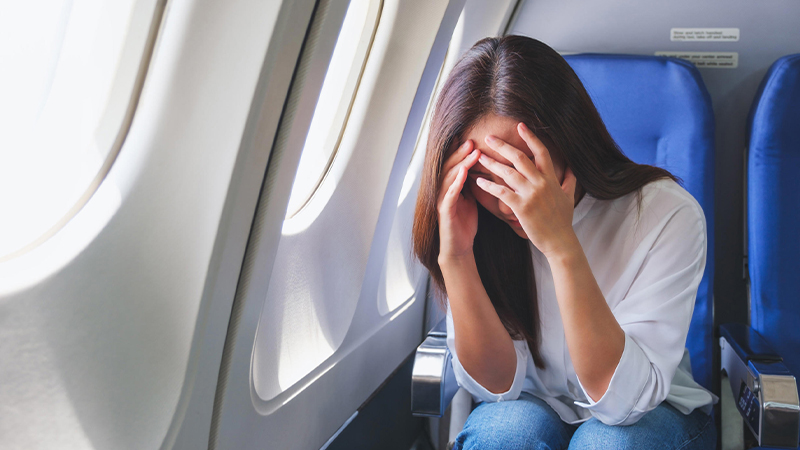
Airplane ear is the feeling of fullness, muffled hearing or pain that develops when cabin pressure changes quickly during takeoff and, especially, landing. Doctors call it ear barotrauma. It usually settles within minutes to a few hours, but a cold, allergy flare or sinusitis can make it worse. Below we explain why it happens, how to prevent it and when to see an ENT (ear, nose and throat) specialist.
What Is Airplane Ear?
Barotrauma is tissue strain caused by a pressure difference between an air-filled space in the body and its surroundings. In the ear, that space is the middle ear, the small chamber behind the eardrum. For the eardrum to vibrate freely and sound to be heard clearly, middle ear pressure needs to match the outside.
The eustachian tube keeps this balance. This narrow channel connects the middle ear to the back of the nose (the nasopharynx) and opens briefly when you swallow, yawn or chew. When an airplane climbs or descends and the pressure changes faster than the tube can respond, the eardrum is pushed inward or outward. That stretching is what people experience as airplane ear.
Passenger cabins are pressurized, but not to sea level. Cabin pressure is generally kept at a level equivalent to an altitude of no more than about 8,000 feet (roughly 2,400 meters). This is why even healthy travelers often notice mild fullness.
Why Is Landing Usually Harder?
During takeoff, cabin pressure falls and the air in the middle ear expands. The extra air usually pushes the tube open on its own, so the climb is easy for most people. During descent, cabin pressure rises and a relative vacuum (negative pressure) forms in the middle ear. This suction tends to hold the walls of the tube together, so the tube has to be opened actively by swallowing, yawning or a gentle equalizing maneuver. If equalization lags behind, the eardrum is pulled inward, pain begins and fluid can collect in the middle ear.
Causes and Risk Factors
The underlying cause is a pressure change that outpaces the eustachian tube. Anything that narrows the tube or interferes with its function raises the risk of airplane ear. The main risk factors include:
- Colds and upper respiratory infections: Swelling at the back of the nose and around the opening of the tube makes it harder to open.
- Allergic rhinitis (nasal allergy): During a flare, the nasal lining swells, mucus increases and tube function suffers.
- Acute or chronic sinusitis: Sinus inflammation affects the tissues behind the nose and can also cause facial pain from sinus barotrauma during the flight.
- Middle ear infection: Flying with fluid or infection behind the eardrum can make pain much worse.
- Being a baby or young child: Children have shorter, narrower and more horizontal eustachian tubes, so equalizing is harder for them, and babies can only show discomfort by crying.
- Sleeping during descent: People swallow less often while asleep, so a nap during descent can end with marked fullness or pain.
- Structural causes of nasal blockage: A significantly deviated septum, enlarged turbinates or, in children, enlarged adenoids can affect airflow around the eustachian tube.
Symptoms
Symptoms range from mild to severe, depending on the pressure difference and its duration.
Mild Symptoms
- A feeling of fullness or blockage, as if there is water in the ear
- Muffled hearing, as though sounds are far away
- Mild discomfort or a sense of pressure
- Crackling or popping when swallowing
More Severe Symptoms
- Intense, throbbing ear pain
- Noticeable hearing loss
- Ringing in the ear (tinnitus)
- Dizziness or a spinning sensation (vertigo)
- Bleeding or blood-stained fluid from the ear
Bleeding together with a sudden drop in pain may mean the eardrum has torn (perforation). Vertigo, ringing and sudden hearing loss may point to inner ear involvement. These symptoms are uncommon, but they should be evaluated promptly.
Prevention Tips Before and During Your Flight
Simple measures often make airplane ear much milder. The goal is to keep the eustachian tube opening frequently, especially during descent.
- Swallow, yawn and chew: Chewing gum, sucking on a hard candy or sipping water during takeoff and landing increases swallowing. Yawning is another effective way to open the tube.
- Use the Valsalva maneuver gently: Close your mouth, pinch your nostrils and breathe out very softly through your nose until you feel a small pop. Forceful or prolonged blowing can harm the eardrum and inner ear, so keep it light.
- Try the Toynbee maneuver: Pinch your nose and swallow a few times. This can be a useful alternative for people who find the Valsalva maneuver difficult.
- Stay awake for the descent: The descent begins well before the wheels touch the runway, and the crew’s landing announcement is usually a good cue. Stay awake and keep repeating your equalizing techniques.
- Consider filtered earplugs: These special earplugs, sold in pharmacies, can slow the pressure change reaching the eardrum. Results vary, so use them alongside the other measures.
- Use decongestants only on medical or pharmacist advice: Decongestant nasal sprays or tablets, taken a set time before takeoff and before landing, may help the tube open. The timing and dose should be tailored to you. They may be unsuitable with high blood pressure, heart rhythm problems, heart disease or pregnancy, and nasal sprays used for more than a few days can cause rebound congestion. They should not be given to babies or young children.
- Keep allergies under control: Continue any allergy treatment your doctor has recommended while traveling.
Flying With Babies and Children
- Breastfeeding, bottle-feeding or offering a pacifier during takeoff and especially landing encourages swallowing.
- Older children can sip water or, if age-appropriate, chew gum; making yawning a game can help.
- Avoid hard candy and gum in young children because of the choking risk.
- If a child has a cold, an ear infection or a bad allergy flare before the trip, check with a pediatrician or ENT specialist.
When to Postpone a Flight
Flying with a heavy cold, active sinusitis, a severe allergy flare or an acute middle ear infection significantly raises the risk of barotrauma. If possible, postpone the trip for a few days; if not, speak with a doctor before you travel. For anyone who has recently had ear, nose or sinus surgery, the decision about when to fly should always come from the operating surgeon, as it depends on the procedure and how healing is progressing. International patients treated in Istanbul should plan their return flight with the surgeon rather than fixing the date in advance.
When to See a Doctor
Mild airplane ear usually clears within hours of landing, sometimes over a few days. See an ENT specialist if you notice any of the following:
- Fullness, muffled hearing or discomfort lasting more than a few days
- Severe or worsening ear pain
- Blood, blood-stained fluid or pus draining from the ear
- Sudden or significant hearing loss
- Vertigo, unsteadiness or nausea
- New ringing in the ear that does not go away
- Fever
- A baby who stays unsettled long after the flight, tugs at the ear or refuses to feed
Diagnosis and Treatment
What the ENT Exam Involves
Diagnosis is usually based on your history and an ear examination. The ENT specialist checks the eardrum with an otoscope or endoscope for inward pulling, fluid or blood behind it, or a tear. The nose and nasopharynx are also examined for swelling, allergy or sinusitis that may be affecting the eustachian tube.
If needed, a hearing test (audiometry) and tympanometry, which measures middle ear pressure, are performed. In patients with vertigo or sudden hearing loss, inner ear function is assessed in more detail. Travelers seen in Istanbul may find it helpful to bring earlier test results and a medication list.
Treatment Options
Treatment depends on severity and any underlying cause:
- Watchful waiting: In mild cases, swallowing, yawning and gentle equalizing exercises are often enough.
- Medication: When a doctor considers it appropriate, short-term decongestants, nasal sprays for allergy and pain relievers may be used. If there are signs of infection, antibiotics may be considered.
- Monitoring an eardrum tear: Small perforations from barotrauma usually close on their own within a few weeks, though some take a few months. Keeping water out of the ear during this time is advised. Tears that do not heal are assessed separately for repair.
- A small incision in the eardrum (myringotomy): In selected patients with persistent middle ear fluid and severe pain, a tiny opening may be made in the eardrum to drain fluid and equalize pressure.
- Treating the underlying cause: Managing chronic sinusitis, allergies or nasal blockage can reduce problems on future flights.
Rarely, a leak of inner ear fluid (perilymph fistula) can cause vertigo and hearing loss. This is managed with rest, avoiding straining and close follow-up; surgical repair may be needed if it does not improve.
Possible Risks and Important Considerations
For most people, airplane ear causes no lasting problems. Occasionally, these complications develop:
- A torn eardrum
- Middle ear fluid lasting for weeks, with reduced hearing
- Middle ear infection
- Ongoing tinnitus or vertigo (rare)
- Permanent hearing loss (very rare)
While symptoms persist, avoid putting cotton swabs in the ear, using ear drops without an examination, or repeating the Valsalva maneuver forcefully. If a tear is suspected, keep water out of the ear and pause swimming.
Ear Barotrauma From Diving
Barotrauma is not limited to flying; it also occurs in scuba diving and freediving. Underwater, pressure changes far faster and more than in an aircraft, raising the risk to the inner ear. Divers should equalize early and often from the start of the descent, avoid diving with a cold or sinusitis, and seek medical help right away if they notice vertigo or hearing loss after a dive.
Airplane Ear: Frequently Asked Questions
How long does a blocked ear last after a flight?
For most people, airplane ear eases within a few minutes to a few hours after landing. If fluid has built up in the middle ear, fullness can last a few days. Longer-lasting symptoms, or pain and hearing loss, should be checked.
Is it safe to fly with a cold?
A badly blocked nose makes the eustachian tube harder to open, which raises the risk of barotrauma. If possible, postpone the flight; if not, talk with a doctor or pharmacist beforehand to plan suitable precautions.
How can I prevent ear pain in my baby on a plane?
Breastfeeding, bottle-feeding or offering a pacifier during takeoff and landing helps your baby swallow and equalize pressure. Decongestants should not be used in babies. If your baby has a cold or an ear infection, check with a doctor before flying.
When can I fly after ear surgery?
It depends on the type of surgery, what was done to the eardrum or middle ear and how healing is going. Always plan your flight with the surgeon who performed the operation.
Can airplane ear cause permanent hearing loss?
Very rarely; most cases resolve on their own or with simple treatment. Permanent hearing loss is usually linked to severe inner ear barotrauma, so anyone with sudden hearing loss or vertigo should be examined without delay.
Conclusion
Op. Dr. Tayfun Demirel, an ENT specialist, evaluates barotrauma symptoms such as ear fullness, pain, reduced hearing and dizziness that persist after a flight at the practice in Ataşehir, Istanbul. The examination covers the eardrum, middle ear, nose and nasopharynx, with hearing tests when needed. Treatment is planned individually, based on the severity of the barotrauma and underlying causes such as allergy or sinusitis. Frequent flyers can also book an appointment for preventive advice. This article is for informational purposes only; an in-person examination is required for diagnosis and treatment.
