
Eardrum repair in children is surgery to close a hole in the eardrum that has stayed open after frequent middle ear infections or after a ventilation tube has come out. The operation protects the child’s ear from water and germs again, helping to prevent bouts of ear discharge and to support hearing. Parents usually want to know at what age it should be done, how school and swimming will be affected, and what the day of surgery will look like.
What Is Eardrum Repair in Children?
The eardrum is a thin membrane at the end of the ear canal that carries sound to the tiny bones of the middle ear. In children it is frequently exposed to infection because the Eustachian tube, the passage connecting the back of the nose to the middle ear, is still short and horizontal. During repeated infections, pus builds up behind the eardrum, puts pressure on it and may cause it to burst, sometimes leaving a lasting opening.
Eardrum repair in children closes this opening with a thin piece of tissue taken from the child’s own body. Doctors call this procedure tympanoplasty. If there is inflamed tissue in the middle ear or a problem with the hearing bones, these can be treated during the same session.
Why Does an Eardrum Hole Matter in Children?
An ear with a hole easily starts draining after a bath or a swim, and every episode can mean more antibiotics, missed school days and sleepless nights. Even mild hearing loss matters for a child whose language is still developing and who learns by listening in class. So a perforated eardrum in a child is not just an ear problem; it can affect school and social life.
Which Children Need Eardrum Repair?
Most holes that appear in children after an infection or a minor injury close on their own. So the first step is usually to wait and keep the ear away from water. If the hole stays open for months and affects the child’s daily life, surgery is considered.
Situations That May Call for Surgery
- A hole that has not closed for months after recurrent middle ear infections
- A permanent opening left behind after a ventilation tube falls out
- Ear discharge that keeps coming back with water exposure or colds
- Hearing loss on testing that could cause difficulties at school or in communication
- Suspicion of a skin cyst (cholesteatoma) in the middle ear
Signs Parents May Notice
Young children cannot always say that something is wrong. Yellow or brown stains on the pillow, dried discharge at the ear opening, and tugging at the ear after a bath are common clues. Turning up the television, responding late when called, often asking “what?” and a teacher’s comments about poor attention may suggest that hearing is affected. These signs are a reason to arrange an ENT examination.
The Link With Recurrent Ear Infections
Acute otitis media, a sudden middle ear infection, is very common in preschool children. Enlarged adenoids, allergies, cigarette smoke or frequent infections picked up at daycare make episodes more frequent in some children. With a hole in the eardrum, germs and water from outside can also reach the middle ear, so infections recur more often. Planning therefore looks not only at the hole but also at adenoid and nasal problems that trigger infections; these are treated first or during the same session when needed.
At What Age Is Surgery Done?
In the past, waiting until age 7 or 8 was recommended, as the Eustachian tube was thought to mature by then. Current studies show that well-selected younger children can also have successful results. Today the decision is based not on age alone but on whether the other ear is healthy, how often infections occur, the state of the adenoids and whether discharge can be brought under control. For a preschooler who still has very frequent ear infections, postponing surgery a little may be the wiser choice.
Preparation and Examination Before Surgery
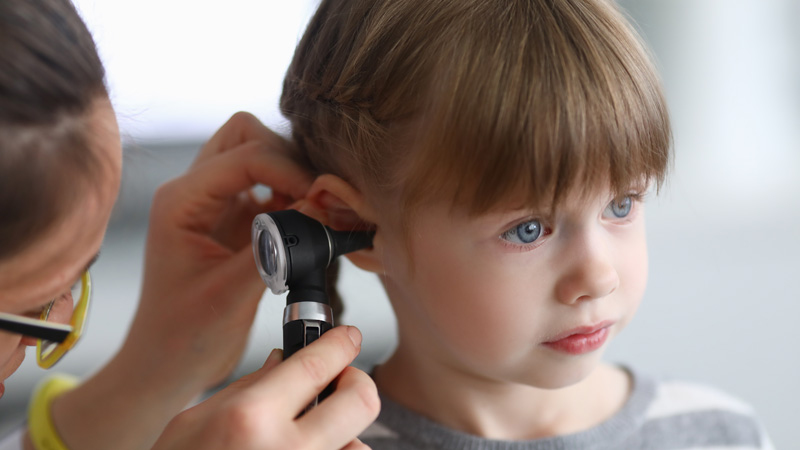
During the examination, the child’s ear is viewed under magnification, the location and size of the hole are recorded, and the other ear is always checked as well. An age-appropriate hearing test and tympanometry, which measures middle ear pressure, are carried out. If enlarged adenoids are suspected, the back of the nose is also examined.
Surgery is not done while the ear is draining, so the ear is first dried with drops and kept dry for a while. When possible, the date avoids the peak winter illness season and exam weeks. Families coming from abroad are encouraged to bring previous hearing tests, doctors’ reports and a list of the child’s medications.
Pre-Surgery Checklist for Parents
- Share your child’s medications, allergies and any previous anesthesia experience.
- Report any fever, cough or runny nose in the days before surgery; the date may be postponed for anesthesia safety.
- Follow the fasting instructions carefully; in young children, fasting times may differ by age.
- Give your child a calm, simple explanation suited to their age, such as “we are going to close the little hole in your ear.”
- Pack a favorite toy, blanket or book; a familiar object noticeably reduces anxiety.
How Is Eardrum Repair Performed in Children?
In children, the operation is always done under general anesthesia, so the child stays still and feels nothing throughout. It usually takes 1 to 3 hours, depending on the size of the hole and any additional work in the middle ear.
Depending on the ear canal width and the position of the hole, the surgeon works through the ear canal with an endoscope or through an incision in the crease behind the ear. The edges of the hole are freshened, and the patch is usually made from the thin muscle covering behind the ear or from cartilage at the ear opening. Cartilage helps make the patch sturdier in children who still tend to get ear infections. After the patch is placed, small dissolvable sponges are put in the ear canal.
What Parents Can Do on the Day of Surgery
A parent’s calm attitude passes directly to the child. Staying with your child until the anesthesia room, offering short, positive reassurance and keeping the goodbye brief help most children cope well. Being there when your child wakes up in the recovery room is important.
Some children wake up restless, tearful or confused; this is a temporary effect of anesthesia. Gentle distraction, such as a favorite story, helps keep little hands away from the bandage and the cotton in the ear. Children usually stay in the hospital overnight for observation and go home the next day.
The First Night in the Hospital
Nurses regularly check the child’s temperature, pain and bandage overnight. Once fully awake, the child is offered water and then light food; any nausea usually passes quickly. A parent staying overnight helps the child sleep more comfortably in an unfamiliar place.
Recovery After Eardrum Repair
For the first few days there may be fullness and mild pain, usually easily managed with pain relievers dosed for the child’s weight. If the surgery was done from behind the ear, an ear bandage may be used for the first days. There are no special dietary restrictions, although soft foods and plenty of fluids on the first day make chewing more comfortable.
The First Days at Home
At home, raising the pillow slightly and having the child sleep on the other side keeps pressure off the operated ear. The cotton at the ear opening can be changed once or twice a day, but nothing should ever be put inside the ear canal. Slight pinkish oozing is normal in the first days. Rough play and activities with a risk of falling, such as trampolines and bicycles, are put off for a while; quiet games, coloring and books help the child rest.
Going Back to School
Most children return to school or daycare in about a week. A break from gym class, ball games and activities with a risk of head bumps is recommended for the first weeks. A short note to the teacher helps, and the child can sit near the front if needed.
Bathing and Swimming
- Keep the ear dry until the doctor allows otherwise; use a cotton ball with petroleum jelly at the ear opening during baths, and keep the child’s head out of the bathwater.
- Pools and the sea have to wait until a check-up shows the eardrum has fully healed, generally a few weeks to two months.
- Earplugs and a swim cap may be recommended when swimming lessons resume.
- Teach your child not to blow their nose hard and to sneeze with the mouth open.
Check-ups usually take place in the first week and then every few weeks. The hearing test is repeated about two to three months later, once the sponges have dissolved and the middle ear swelling has settled.
Notes for Families Traveling from Abroad
Families coming to Istanbul should generally plan to stay at least until the first check-up, about one week after surgery. Flying is usually avoided for the first several weeks after eardrum repair, because cabin pressure changes can strain the healing patch; your surgeon will advise when your child can fly, so confirm return dates before booking. Later check-ups and the hearing test at around two to three months can generally be arranged with a pediatric ENT specialist at home.
Possible Risks and Important Considerations
The operation usually goes smoothly. Because the Eustachian tube is still developing and colds are frequent, the patch failing to take or a new hole opening later is somewhat more likely than in adults; another repair can then be planned when the child is older.
Other risks include ear infection, temporary taste change, ringing in the ear and, rarely, hearing that does not improve as expected. Parents should contact the doctor without waiting in these situations:
- Fever above 101.3°F (38.5°C) or pain that does not ease with pain relievers
- Foul-smelling, yellow-green or bloody discharge from the ear
- Redness and swelling behind the ear
- Unsteadiness, vomiting or facial asymmetry
Eardrum Repair in Children: Frequently Asked Questions
Will the hole close on its own as my child grows?
Most holes that form during an acute ear infection close within a few weeks once the infection clears. A hole open for months with thickened edges, however, is unlikely to close with age, and eardrum repair is then usually considered.
Is this the same surgery for a hole left after an ear tube?
Yes. The eardrum usually closes after a tube falls out, but in some children the opening persists. Such small holes can sometimes be closed with a fat or cartilage patch in a shorter procedure.
Can my child fly after surgery?
Flying is generally avoided for the first weeks. Plan the surgery date around vacations, and consult the doctor in advance about any unavoidable trip.
Could surgery make my child’s hearing worse?
In the first weeks, the sponges in the ear may reduce hearing; this is temporary. In most children, hearing is preserved or improves once healing is complete. The rare risk of reduced hearing is discussed separately before surgery.
Can enlarged adenoids be removed at the same time?
If enlarged adenoids trigger infections, some children have them removed first and the eardrum repaired once infections ease. In other cases, both can be done under the same anesthesia, depending on the examination findings.
Conclusion
Op. Dr. Tayfun Demirel, ENT specialist, evaluates children with a hole in the eardrum, frequent ear discharge or an eardrum that has not closed after a tube at the practice in Ataşehir, Istanbul. Taking into account the child’s age, the condition of the other ear and the history of ear infections, the timing and method of surgery are planned individually, and the family’s questions are answered at every stage. To book an examination for your child, please contact the clinic. This article is for informational purposes only; an in-person examination is required for diagnosis and treatment.
