
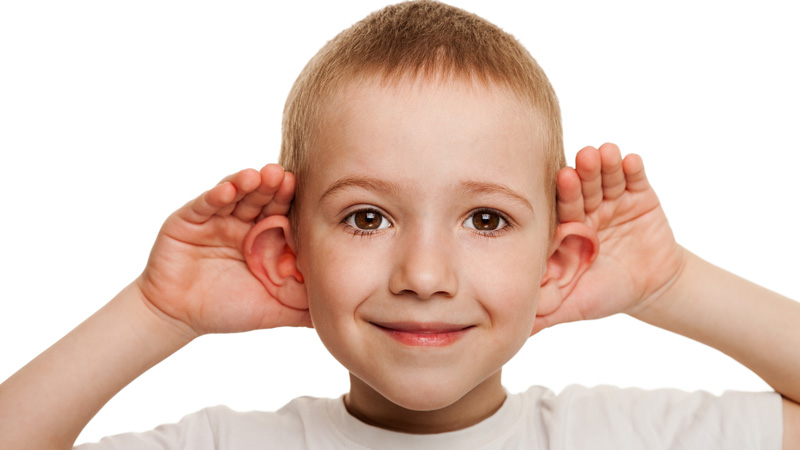
Prominent ear surgery in children is a reshaping operation that brings ears standing out too far from the head into a more natural position. Also known as otoplasty, it is usually planned as a child approaches school age, once ear growth is largely complete. For prominent ears noticed in early infancy, ear molding, a nonsurgical method, is also an option.
What Is Prominent Ear Surgery in Children?
Prominent ears develop when certain folds of the ear cartilage do not form fully, or when the bowl-shaped area around the ear opening is deep. They are usually present from birth, and other family members often have a similar ear shape. Prominent ears have no effect on hearing: the child hears normally, and the ear canal and eardrum are healthy.
For this reason, prominent ear surgery in children is not a medical necessity but a choice related to the child’s appearance and, as a result, how the child feels. The operation reshapes the cartilage through a small incision behind the ear and brings the ear closer to the head.
Ear Molding for Babies
In newborns, ear cartilage is very soft during the first weeks after birth because of hormones passed on from the mother. During this window, small molds fitted inside and around the baby’s ear can guide the cartilage into a new shape. This method, called ear molding, requires no surgery or anesthesia.
- The earlier molding starts, the better the outcome; ideally it begins within the first few weeks.
- As cartilage firms up, molding becomes less effective; in babies a few months old it is often not enough.
- The molds usually stay on continuously for several weeks and are adjusted at regular check-ups.
- Besides prominent ears, it can be used for some other congenital shape differences, such as a folded ear rim.
Parents who notice an unusual ear shape after birth are therefore advised to see an ENT specialist without delay. If the molding window has passed, the solution is surgical correction at a suitable age.
Which Children Are Candidates for Prominent Ear Surgery?
Two key questions guide the decision: Is the child’s ear developed enough, and have the ears become a problem for the child? If the answer to both is yes, otoplasty is considered.
The Right Age and Ear Development
The ear grows quickly after birth and reaches most of its adult size at around age 5 to 6. Surgery after this age is not thought to harm further ear growth. Children of this age are also more cooperative about protecting the bandage and following simple rules afterward. That is why prominent ear surgery is most often scheduled just before a child starts school or in the early elementary years.
Teasing, Bullying and Emotional Effects
Preschoolers rarely notice that their ears look different, but once school begins, nicknames and jokes from classmates may start. Some children talk about this openly; others withdraw, resist going to school, avoid photos or grow their hair long to hide their ears.
Research suggests that children with visible differences in appearance may be more likely to struggle with self-esteem and social shyness. Parents should watch for changes in behavior and work with the teacher if needed. Even so, the decision to operate should be made, as far as possible, with the child’s own wish and not only the family’s.
A Common Dilemma for Families
Some parents wonder whether surgery is right when their child has no complaints yet. There is no single correct answer. For clearly prominent ears, correction before school may spare the child from ever facing teasing. For milder cases, waiting until the child is old enough to express a preference is also a reasonable option.
Who Is a Good Candidate?
- Children whose general health allows general anesthesia
- Children who say their ears bother them, or who face social problems because of them
- Children old and mature enough to cope with the bandage and restrictions after surgery
- Children without an active skin infection around the ear or another problem needing treatment
Preparation and Examination Before Surgery
During the examination, each ear is assessed separately to see whether the prominence comes from the upper, middle or lower part of the ear. The ear canal and eardrum are checked for any accompanying middle ear problem. Photographs are taken, and the planned correction is explained to the family. Blood tests and a pediatrician’s assessment may be requested before anesthesia. Families traveling from abroad should bring the child’s medical records, vaccination history and medication list.
Preparing Your Child for Surgery
When children know about the operation in advance and are told honestly, anxiety on the day is noticeably lower. A short, age-appropriate, reassuring explanation is enough, for example: “The doctor will move your ears back a little while you are in a deep sleep, and when you wake up you will have a bandage on your head.”
- Answer questions calmly and honestly; offer to ask the doctor together about anything you do not know.
- Picture books about hospitals or a toy doctor kit can turn the process into play.
- Putting a bandage on a teddy bear or doll helps the child accept their own bandage on waking.
- Scheduling surgery during a school break lets the bandage period pass away from classmates.
- Follow fasting instructions strictly, and tell the doctor if a fever or cough starts in the days before surgery.
The Morning of Surgery
Hunger and an unfamiliar place can make a child restless. Arriving on time without rushing and filling the wait with a favorite toy or book helps, and some children are given a calming syrup before anesthesia. A parent can usually stay until the child falls asleep; a short, calm goodbye eases separation, and seeing mom or dad on waking reassures the child.
How Is the Surgery Performed in Children?
In children, this surgery is always performed under general anesthesia, and correcting both ears usually takes 1 to 2 hours. The child is in a deep sleep throughout and feels nothing, with the anesthesiologist present the whole time.
The incision is made on the back of the ear. Because children’s cartilage is flexible, the new fold can often be created with permanent stitches alone. If the bowl around the ear opening is deep, it is also stitched closer to the back of the ear, and a small strip of cartilage may be removed. A forward-facing earlobe is corrected as well. The incision is closed with dissolvable stitches, so stitch removal is usually not needed. At the end, the ears are cushioned with soft cotton and a protective bandage is wrapped around the head.
Recovery After Prominent Ear Surgery
The child stays in the hospital overnight for observation and usually goes home the next day. On waking, sounds may seem a little muffled because of the bandage, and the head may feel snug; knowing in advance that this is temporary comforts the child. Mild pain usually settles easily with pain relievers dosed for the child’s weight.
The Bandage and Headband Phase
The head bandage worn in the first days protects the ears in their new position and is removed at the check-up. It is then replaced with an elastic headband. For children, the most important point is wearing this band regularly, especially at night, because an ear rubbing against the pillow during sleep can fold forward. Letting the child choose a favorite color or pattern reduces reluctance to wear it.
Back to School and Play
Most children return to school in about a week. A short, confident answer for classmates, such as “I had a small operation on my ears,” works well. Gym class, contact games like soccer or wrestling, and swimming are usually postponed for a few weeks. Informing the teacher helps protect the ears from bumps during recess.
What Parents Should Watch
- Do not let your child pull at the bandage or cotton; if they get bored, distract them with games and books.
- Plan hair washing and baths as the doctor advises; for the first bath, use lukewarm water without rubbing the ears.
- Choose front-opening clothes instead of tops pulled over the head.
- Watch for knocks to the head during play with siblings and pets.
Bruising and swelling usually fade considerably within two weeks. The ears can take a few months to settle into their final shape, and progress is followed at check-ups.
Notes for Families Traveling from Abroad
Families should generally plan to stay in Istanbul for about a week, until the head bandage has been removed and the incisions checked. As the middle ear is not involved, flying is usually possible after this check, though your surgeon will advise based on your child’s healing. Keep the headband on during the trip and protect the ears from bumps. Later follow-up can generally be coordinated remotely or with a pediatrician or ENT specialist at home.
Emotional Support After Surgery
When the bandage comes off, some children dislike the swollen, bruised look of their ears or avoid the mirror. Calmly explaining that the result will become clear over the coming weeks, and noticing small improvements together, helps. Many families find their child more relaxed about haircuts, photos and social situations once healing is complete. If bullying before surgery affected the child deeply, support from the school counselor or a child psychologist should also be considered.
Possible Risks and Important Considerations
The operation usually goes smoothly, and in most cases both the family and the child are pleased with the outcome. Still, families should be informed beforehand about possible problems: a collection of blood under the skin, infection, the ear partly returning to its old position, slight differences between the two ears and permanent stitches surfacing behind the ear months later. Most of these can be corrected with simple procedures when noticed early.
Because children cannot always express pain clearly, parents should closely watch for these signs:
- The child refusing to let anyone touch one ear in the first days, or growing increasingly restless
- Marked swelling under the bandage, a blood-soaked bandage or a bad smell
- Fever above 101.3°F (38.5°C)
- Dark bruising or redness of the ear after the bandage is removed
If any of these appear, contact the doctor without waiting for the scheduled check-up.
Prominent Ear Surgery in Children: Frequently Asked Questions
What is the right age for otoplasty?
Because ear development is largely complete by around age 5 to 6, surgery is usually planned from this age on. Doing it before school starts reduces the chance of the child facing comments from peers.
Will surgery affect my child’s ear growth?
Otoplasty done at a suitable age is not thought to harm later ear growth. The ear keeps growing with the child while maintaining its new shape.
My baby’s ears stick out; will they correct themselves?
Clearly prominent ears are unlikely to correct themselves with growth. If the baby is only a few weeks old, ear molding can be tried; if that window has passed, surgery is considered at a suitable age.
What if my child does not want the operation?
Since prominent ears are not a health problem, surgery can wait until the child is ready. Older children can decide for themselves, and the operation can also be done in the teenage years or adulthood.
Will the scar show?
The incision is behind the ear, so it is not visible from outside. It fades over time and, in most children, does not stand out even with short hair.
Conclusion
Children who struggle because of the appearance of their ears, and newborns with an unusual ear shape, are examined by ENT specialist Op. Dr. Tayfun Demirel at the practice in Ataşehir, Istanbul. Taking into account the child’s age, ear development and the family’s expectations, ear molding or surgery is planned individually. Families can contact the clinic to discuss their child’s situation and schedule an appointment. This article is for informational purposes only; an in-person examination is required for diagnosis and treatment.
